
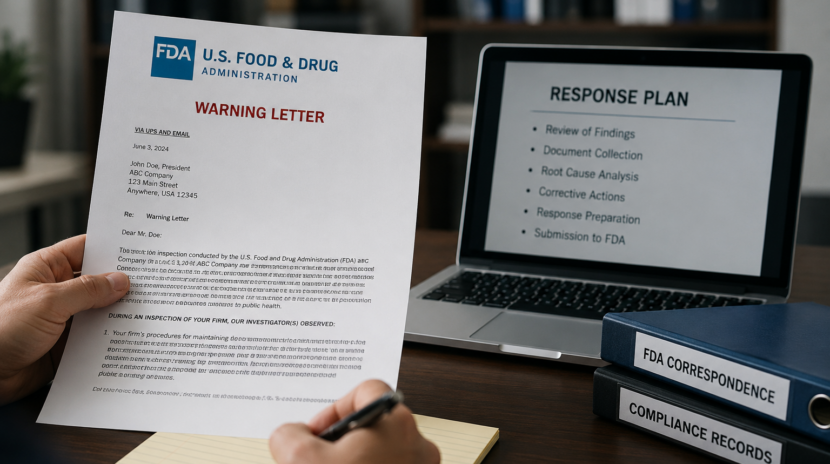
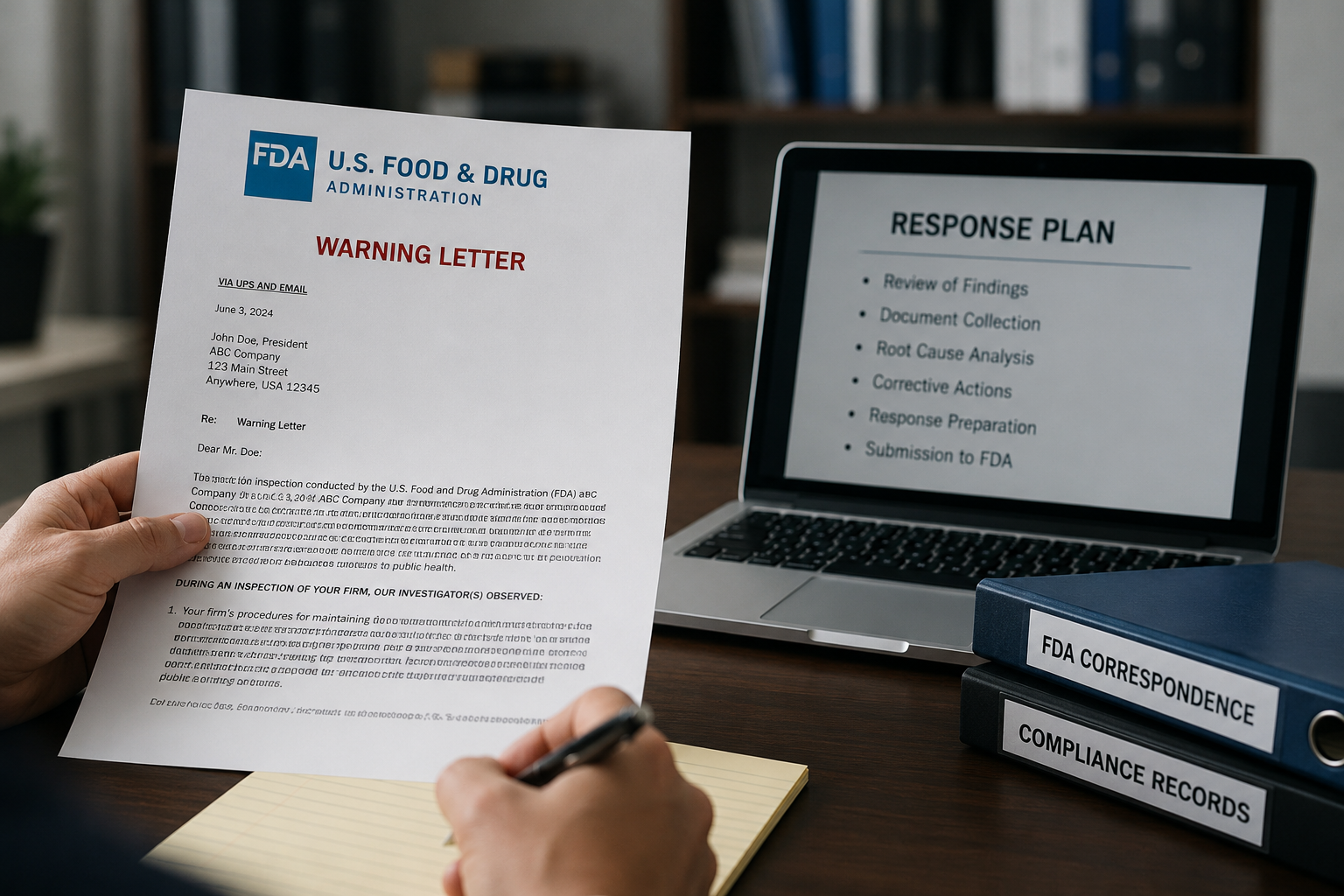
Receiving an FDA warning letter is stressful and urgent for any company operating in regulated spaces. These letters point to specific compliance gaps and, if left unaddressed, can lead to costly enforcement. This guide lays out a clear, practical path for responding — from immediate deadlines to drafting a defensible response and shaping a legal strategy that protects your operations and reputation.
While a warning letter signals a problem, it’s also an opportunity to fix processes and restore regulatory confidence. Below, we walk through how to identify the core issues, design corrective actions, prepare a focused response, engage counsel when needed, and document everything so you can move forward with control and clarity.
What Is an FDA Warning Letter and Why Is It Important?
An FDA warning letter is a formal notice that a company has violated federal standards. The letter specifies areas of non-compliance and asks the company to take corrective steps. Because these communications can precede enforcement actions — such as product holds, recalls, or injunctions — understanding their significance and responding appropriately is essential.
A timely, thoughtful response shows regulators that your company takes compliance seriously. Ignoring or downplaying the issues can cause reputational harm, operational disruption, and heightened regulatory scrutiny. Prompt corrective action helps limit those risks and demonstrates commitment to safety and quality.
How to Respond to an FDA Warning Letter: Deadlines, Steps, and Legal Strategy for Compliance
Handling a warning letter effectively requires a structured approach. Key components include:
- Understand the Issues
- Corrective Actions
- Draft a Response
- Comprehensive Coverage
- Legal Assistance
- Communication with the FDA
- Documentation
These steps help organize priorities and meet required timelines so you can reduce regulatory and business risk.
Understand the Issues
Start with a careful review of the warning letter. Identify each cited violation and the facts the FDA relied on. Typical findings include labeling errors, manufacturing process lapses, or departures from approved protocols. A clear, shared understanding of the specific problems sets the stage for effective corrective work.
Misreading or minimizing the letter’s concerns can lead to incomplete fixes and repeated findings. Bring together quality, operations, and any clinical or technical teams needed to map out what happened and why before you draft your response.
Corrective Actions
After you’ve identified the issues, develop and start implementing corrective actions aimed at both fixing the immediate problem and preventing recurrence. Key steps include:
- Investigate Root Causes: Carry out focused investigations to determine how the non-compliance arose.
- Take Corrective Measures: Implement practical fixes — from process updates to staff training or equipment changes — that directly address the root cause.
- Set a Timeline: Create clear milestones for each corrective step and be prepared to share that schedule with regulators.
Document every action you take so the record demonstrates your commitment to resolving the issues raised by the FDA.
Draft a Response
Your written reply should be concise, fact-based, and complete. It should show you understand the violations and explain what you’ve done or will do to address them. Include:
- Acknowledgment of the Issues: State that you recognize the violations cited and accept responsibility where appropriate. However, care must be taken when admitting any violation, as these admissions can be used in the current and potentially future actions.
- Summary of Corrective Actions: Describe the corrective and preventive actions already taken and those planned.
- Timelines for Implementation: Provide realistic dates for key milestones and project completion.
If you have retained outside counsel or specialized consultants, mentioning that in your response can reassure the FDA that you are taking the matter seriously and have access to technical or regulatory resources. For help navigating these matters, consider the FDA consultant services available to guide companies through complex compliance issues.
Comprehensive Coverage
Your response should address every point raised in the letter and, when relevant, related weaknesses the FDA didn’t explicitly cite. Comprehensive replies typically include:
- Responses to All Findings: Answer each item the FDA lists so there’s no ambiguity about your remediation.
- Follow-Up Plans: Describe ongoing monitoring and how you will sustain compliance beyond the immediate fixes.
A broad, proactive approach signals to regulators that you’re committed to lasting improvement, not just a quick fix.
Legal Assistance
Working with attorneys who focus on FDA matters can make a material difference. Counsel can help with:
- Interpreting Complex Requirements: Clarifying regulatory language and potential legal exposure.
- Shaping Strategy: Framing responses to reduce enforcement risk while protecting your business interests.
- Communicating with the FDA: Ensuring your submissions are clear, accurate, and appropriately framed.
Engaging legal support doesn’t guarantee a particular outcome, but it helps you present a stronger, legally sound response. Learn more about the team’s background and services on the about us page.
Communication with the FDA
Keep lines of communication open and professional. Best practices include:
- Timely Replies: Respond within the FDA’s stated deadlines and avoid unnecessary delays.
- Record-Keeping: Document all interactions with agency staff so you have a clear paper trail.
Clear, documented communication reinforces your credibility and helps build a constructive relationship with the agency.
Documentation
Robust documentation is essential. Good records serve as proof of the actions you’ve taken and form the backbone of your defense if the FDA seeks further information. Specifically:
- Evidence of Actions: Keep dated records of investigations, corrective measures, and training.
- Defensive Support: Documentation can show regulators that remediation was thorough and timely.
Maintain a compliance log that captures timelines, decisions, and all communications related to the warning letter response.
What are the key components of a corrective action plan?
A practical corrective action plan should include:
- Problem Identification: A clear statement of the issues found.
- Root Cause Analysis: An assessment of what caused the problem.
- Corrective Actions: Specific steps to fix the issues.
- Implementation Timeline: Dates and milestones for each action.
- Monitoring and Review: Procedures to confirm the fixes are effective over time.
This structure promotes accountability and continuous improvement across the organization.
How do you develop an effective corrective action plan for an FDA warning letter?
To build a strong plan, follow these steps:
- Analyze the Violations: Use the FDA’s findings to focus your investigation.
- Mobilize Cross-Functional Teams: Include operations, quality, and any technical functions affected.
- Assign Accountability: Name responsible owners for each corrective task.
- Monitor and Report: Track progress and keep leadership informed with regular updates.
Clear roles and transparent reporting increase the likelihood that remedial steps will be completed and sustained.
What happens if you miss the FDA warning letter deadline?
Missing the FDA’s response deadline can have serious consequences, including:
- Enforcement Action: The agency may escalate to product seizures, injunctions, or other measures.
- Reputational Harm: Delays can damage trust with regulators, customers, and partners.
- Heightened Oversight: The FDA may subject the company to more frequent inspections or closer review.
Prioritize meeting deadlines and, if you can’t, notify the FDA promptly with an explanation and a realistic plan for when you will complete your response.
How does the FDA issue warning letters?
Warning letters typically follow an inspection or review. The process generally includes:
- Inspection Findings: The FDA documents observations from inspections or other reviews.
- Notification: If violations are found, the agency issues a letter detailing the infractions.
- Company Response: The company must respond within the timeframe provided, explaining corrective actions taken or planned.
Understanding this process helps companies prepare for inspections and respond more effectively if issues arise.
Analysis of FDA Warning Letter Trends in Pharmaceutical cGMP Violations
This research examines recurring patterns and root causes in FDA Warning Letters related to current Good Manufacturing Practices (cGMP) for pharmaceutical firms. It highlights organizational and procedural shortcomings that commonly lead to non-compliance and offers practical takeaways to strengthen cGMP adherence. Proactive approaches to cGMP compliance: insights and key takeaways from USFDA warning letters to pharmaceutical industries between 2019 and 2024, 2019
Overall, warning letters are a key enforcement tool the FDA uses to protect public health by prompting corrective action and improved adherence to regulatory standards.
These analyses are applicable beyond pharmaceuticals and help inform compliance across a wide range of regulated products.
FDA Warning Letters: Compliance Challenges for Over-the-Counter Drug Products
Over-the-counter drug products require rigorous oversight to ensure safety and effectiveness. Despite ongoing surveillance, recurring compliance problems have led to frequent warning letters. This study identifies common challenges and regulatory trends affecting OTC products based on CDER warning letters from January 2020 through September 2024.USFDA warning letters: an analysis of compliance in over-the-counter drug products (2020–2024), R Joga, 2020
If you need immediate guidance or want to discuss legal options tailored to your situation, reach out to learn about the firm’s regulatory services via their contact page.
Frequently Asked Questions
What are the potential consequences of ignoring an FDA warning letter?
Failing to respond can lead to significant impacts: enforcement actions (like seizures or injunctions), reputational damage, and increased regulatory oversight. It can also disrupt sales and operations. Treat warning letters as urgent compliance matters to avoid escalating penalties.
Can a company contest the findings in an FDA warning letter?
Yes. A company can present evidence to dispute the FDA’s conclusions, typically through a formal written response that includes supporting documentation. Working with counsel is recommended to ensure arguments are clearly framed and backed by appropriate records.
How can companies prevent receiving an FDA warning letter?
Preventive steps include maintaining a robust compliance program: regular internal audits, ongoing employee training, and staying current with FDA guidance. Building a culture of quality and prompt issue escalation reduces the risk of enforcement actions.
What role does employee training play in FDA compliance?
Training is central to compliance. Regular, role-specific instruction helps staff understand regulatory expectations and company procedures, reducing errors and improving early detection of problems. Well-trained employees are a first line of defense against non-compliance.
How important is it to document compliance efforts?
Thorough documentation is crucial. Records of investigations, corrective actions, and training provide evidence of your response and commitment to compliance. These records are often decisive during inspections or any subsequent regulatory review.
What should be included in a follow-up to the FDA after addressing a warning letter?
Follow-ups should summarize the corrective actions completed, include timelines for outstanding items, and attach supporting documents. Clear, organized follow-ups help reassure the FDA that the issues were addressed and that ongoing controls are in place.
Is legal counsel necessary when responding to an FDA warning letter?
Legal counsel is not mandatory, but it is highly advisable. Attorneys experienced with FDA matters can help you interpret findings, craft a defensible response, and reduce the risk of further enforcement. Their involvement often strengthens the quality and clarity of submissions to the agency.
Conclusion
A well-managed response to an FDA warning letter can convert a regulatory setback into a chance to reinforce systems and restore confidence. By diagnosing the issues, implementing corrective actions, keeping clear records, and communicating professionally with the agency — with legal support when appropriate — companies can resolve concerns and strengthen ongoing compliance. For tailored advice, consider contacting the team to discuss next steps.